“Arabica coffee cultivation” search results (3000)

Introduction to the growing environment of Yunnan coffee and the proportion of seed brewing methods
Yunnan small grain coffee introduces Yunnan boutique coffee beans. China's coffee cultivation is concentrated in Yunnan and Hainan provinces. Yunnan has a large output, with an annual output of about 26000 tons in recent years, accounting for 90 per cent of the national output. It is said that Yunnan coffee came from the French 70 or 80 years ago. The main variety is Arabica Arabica, that is, the so-called small seed coffee, commonly known as Yunnan small grain coffee. Yunnan high-quality
2016-09-08 Yunnan coffee growth regional environment seeds methods brewing mode proportion medium
The species of coffee trees planted with coffee beans.
The coffee beans we usually see are red fruits on trees, seeds without peel and pulp. It is a kind of plant, so there will naturally be different tree species, just as there are many kinds of apples. There are two main categories visible in the market: Arabica and Robusta (rough flavor, caffeine more than twice as high as Arabica, not a boutique coffee variety. But in recent years, India
2015-01-27 Coffee tree species coffee beans planting species we usually see coffee raw beans
Coffee Basics About Coffee Trees and Caffeine
Linnaeus classified coffee plants in the Rubiaceae family, e.g. Gardenia. The great naturalist named it Coffea. Although plants in the wild can grow to 10-12 metres tall, those in plantations are about 3 - 5 metres tall, except in Colombia, where few species exceed 2 metres. This makes farming and picking easier and cultivation more economical. leaves
2014-09-11 coffee knowledge coffee basics coffee tree caffeine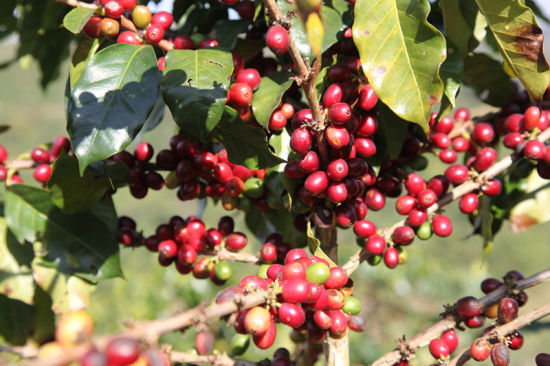
What are the types of coffee trees? Arabica species Robasta species Liberian species
What are the types of coffee trees? There are more than 6000 species of coffee trees, most of which are tropical trees and shrubs. There are four main coffee trees in the world, of which only two are of real commercial value and are planted in large quantities, and the quality of the coffee beans produced by other coffee trees is also higher than that of other coffee trees. The first is Arabica beans, which account for the world's output.
2016-03-24 Coffee category which rabbi card Robbas bass Libby subspecies coffee
Boutique coffee specialty coffee coffee bean variety
Abstract: coffee trees are generally divided into three categories: Arabica species, Robesta species and Liberika species. With regard to the cultivation of crops, seed selection is a very important factor. Every year, agronomists are studying higher quality and higher yield varieties of wheat, soybeans and corn, as well as how to make apples more delicious, beautiful and resistant to diseases and insect pests. in fact, the same is true of coffee.
2016-05-04 Boutique coffee specialty coffee beans varieties
Coffee classification
Special classification system of coffee: 1. Subgenus Coffea: 2. Malagasy coffee subgenus: 3. Subgenus Pala Coffee: 4. Age coffee subgenus: a, red coffee group: B, thick-skinned coffee group: C, Mozambican coffee group: d, black fruit coffee group E, dwarf coffee group: red fruit coffee group: a) Arabica species: Tibica varieties: (Tp)
2014-07-16 Coffee knowledge coffee classification coffee encyclopedia
Basic knowledge of all aspects of coffee
Linnaeus (Swedish naturalist) classifies coffee plants into the Rubiaceae family, such as gardenia. The great naturalist named it Coffea. Although wild plants can grow as high as 10-12 meters, the plantations are about 3 to 5 meters high, with the exception of Colombia, where tree species rarely exceed 2 meters. This makes farming and picking easier and more economical to cultivate. Leaves
2015-08-25 About coffee parties noodles basic knowledge
The Coffee Encyclopedia teaches you to identify the types of specialty coffee beans
At present, the most important coffee beans mainly come from two varieties, namely coffeaarabica and coffeacanephore. The former is the so-called arabica growing coffee beans. The latter is also known as robusta to grow coffee beans. The plants, cultivation methods, environmental conditions, appearance, chemical composition and even the processing methods of the subsequent raw beans of the two kinds of coffee beans are different.
2014-09-19 Coffee encyclopedia types of coffee beans
Fine Coffee Science explains in detail the three native species of coffee
Coffee, we generally refer to the finished product: the coffee we drink, also refers to coffee beans. Coffee belongs to the evergreen shrub of the genus Coffee of Rubiaceae. Coffee has some medicinal effects, such as waking up the brain, strengthening the stomach, stopping bleeding, dissipating heat, strengthening the body, etc., hee hee, if anyone is blinded by love, have a cup of coffee to wake up! There are about 40 species of coffee plants, but they can produce commercially valuable
2014-11-13 Coffee knowledge boutique caffeine coffee native species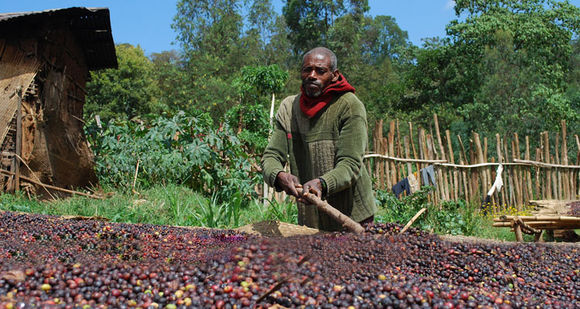
Kenya Coffee Tree Kenya Coffee beans Kenya Coffee Farm Kenya AA++
Kenya is bordered to the north by Ethiopia, the origin of Arabica coffee trees, but it was not until the beginning of the 20th century that coffee cultivation began. In the 19th century, missionaries introduced Arabica trees from the leaves, but did not plant them in large quantities. It was not until 1893 that coffee was cultivated on a large scale because of the introduction of Brazil's ancient bourbon seeds. That is to say, Kenyan coffee is of Brazilian origin, because of water.
2016-03-22 Kenya coffee coffee beans farms AA++
Coffee classification system
Special classification system of coffee: 1. Subgenus Coffea: 2. Malagasy coffee subgenus: 3. Subgenus Pala Coffee: 4. Age coffee subgenus: a, red coffee group: B, thick-skinned coffee group: C, Mozambican coffee group: d, black fruit coffee group E, dwarf coffee group: red fruit coffee group: a) Arabica species: Tibica varieties: (Tp)
2014-06-25 Coffee knowledge coffee classification coffee encyclopedia
Basic knowledge of all aspects of coffee decaf coffee
Linnaeus (Swedish naturalist) classifies coffee plants into the Rubiaceae family, such as gardenia. The great naturalist named it Coffea. Although wild plants can grow as high as 10-12 meters, the plantations are about 3 to 5 meters high, with the exception of Colombia, where tree species rarely exceed 2 meters. This makes farming and picking easier and more economical to cultivate. Leaves
2015-10-07 About coffee parties noodles basics caffeine
Flavor and taste of coffee manor in Kenya Berman Manor Ethiopia
Kenya is bordered to the north by Ethiopia, the origin of Arabica coffee trees, but it was not until the beginning of the 20th century that coffee cultivation began. In the 19th century, missionaries introduced Arabica trees from the leaves, but did not plant them in large quantities. It was not until 1893 that coffee was cultivated on a large scale because of the introduction of Brazil's ancient bourbon seeds. That is to say, Kenyan coffee is of Brazilian origin, because of water.
2016-07-15 Kenya Coffee Manor producing area Flavor palate introduction Berman Yesso Pia
Introduction of coffee beans and some boutique coffee in the main producing areas of coffee beans in the world (3)
Introduction of coffee beans and some fine coffee in the main producing areas of coffee beans in the world: Africa
2014-06-18 Coffee knowledge coffee bean producing areas boutique coffee
The treatment of coffee originating from El Salvador coffee
The Arabica coffee tree, which originated in Ethiopia, accounts for 70% of the world's output of coffee beans; the world-famous Blue Mountain Coffee and Mocha Coffee are almost all Arabica species. The coffee trees planted in Arabica are suitable for growing in high mountains with large temperature difference between day and night, as well as soils with low humidity and good drainage; the ideal altitude is 500m ~ 2000 m, and the higher the altitude is, the better the quality is.
2016-05-26 El Salvador coffee origin treatment method Ethiopia rabbi
What is the roasting caramelization reaction of origin coffee?
The Arabica coffee tree, which originated in Ethiopia, accounts for 70% of the world's output of coffee beans; the world-famous Blue Mountain Coffee and Mocha Coffee are almost all Arabica species. The coffee trees planted in Arabica are suitable for growing in high mountains with large temperature difference between day and night, as well as soils with low humidity and good drainage; the ideal altitude is 500m ~ 2000 m, and the higher the altitude is, the better the quality is.
2016-06-06 Origin coffee which roasting saccharification reaction origin Ethiopia la
Coffee producing area Coffee introduction to Zimbabwe
High-quality Arabica coffee beans cater to the needs of foodies. Coffee cultivation in Zimbabwe began relatively recently, in the 1960s, when farmers in southern Africa set up coffee plantations. Coffee cultivation in Zimbabwe is mainly concentrated in the eastern highlands near Mozambique, mainly by Chimanim
2014-11-05 Coffee knowledge coffee origin coffee introduction Zimbabwe
Start with coffee beans (42)-Africa-Zimbabwe
High-quality Arabica coffee beans cater to the needs of foodies. Coffee cultivation in Zimbabwe began relatively recently, in the 1960s, when farmers in southern Africa set up coffee plantations. Coffee cultivation in Zimbabwe is mainly concentrated in the eastern highlands near Mozambique, mainly by Chimanima
2014-06-13 Coffee beans Africa Zimbabwe
Coffee beans Africa Zimbabwe
High-quality Arabica coffee beans cater to the needs of foodies. Coffee cultivation in Zimbabwe began relatively recently, in the 1960s, when farmers in southern Africa set up coffee plantations. Coffee cultivation in Zimbabwe is mainly concentrated in the eastern highlands near Mozambique, mainly by Chimanima
2014-09-22 Coffee beans Africa Zimbabwe
Farfell Manor is the most interesting coffee plantation in Zimbabwe.
High-quality Arabica coffee beans cater to the needs of foodies. Coffee cultivation in Zimbabwe began relatively recently, in the 1960s, when farmers in southern Africa set up coffee plantations. Coffee cultivation in Zimbabwe is mainly concentrated in the eastern highlands near Mozambique, mainly by Chimanima
2016-05-21 Farrow Phil Manor Farfell is the most interesting coffee plantation.